
21st Aug 2026
MEISTECH MONTHLY- August 2026 The latest from Mercedes-Benz & Mercedes-AMG — launches, performance, technology and motorsport
MEISTECH MONTHLY
August 2026
The latest from Mercedes-Benz & Mercedes-AMG — launches, performance, technology and motorsport
Welcome to Meistech Monthly, our new regular look at what's happening across the world of Mercedes-Benz and Mercedes-AMG.
Rather than simply repeating the press releases, each month we'll pick out the developments we think actually matter — the new cars, AMG launches, performance technology, motorsport and the engineering that's likely to shape the Mercedes we will be driving, servicing and modifying in the years ahead.
And August has certainly given us plenty to talk about.
AMG CLA 45 Goes Electric — And Straight to the Nürburgring
This could be one of the most significant AMG launches of the year.
The new Mercedes-AMG CLA 45 4MATIC+ is fully electric — but AMG clearly doesn't want anybody thinking that means it has gone soft.
Before the car has even properly reached customers, AMG has taken it to the Nürburgring Nordschleife.
The result?
7 minutes 32.070 seconds.
That's an officially measured and notarised lap around the 20.832km Nordschleife and, according to Mercedes-AMG, makes the CLA 45 the fastest vehicle in its segment around the circuit.
More interesting to us, however, is what's underneath it.
The new CLA 45 uses three axial-flux electric motors — two at the rear and one at the front — producing up to:
500kW / 680hp
It'll hit 100km/h in just 2.7 seconds using the quoted rollout measurement.
This isn't simply a big battery connected to some powerful motors either.
AMG has developed a new Performance 4MATIC+ system capable of independently controlling the motors and distributing torque between the axles and individual rear wheels.
There's adaptive AMG RIDE CONTROL suspension, active aerodynamics and something called the Predictive Performance Manager.
That system effectively analyses the circuit and decides where the car should deploy its available energy to achieve the fastest possible lap.
It's a fascinating indication of where performance-car development is heading.
For decades we tuned performance cars by improving airflow, fuelling, ignition, boost and mechanical grip.
Now we're talking about software deciding precisely where around a circuit hundreds of kilowatts should be deployed.
That's a very different kind of tuning.
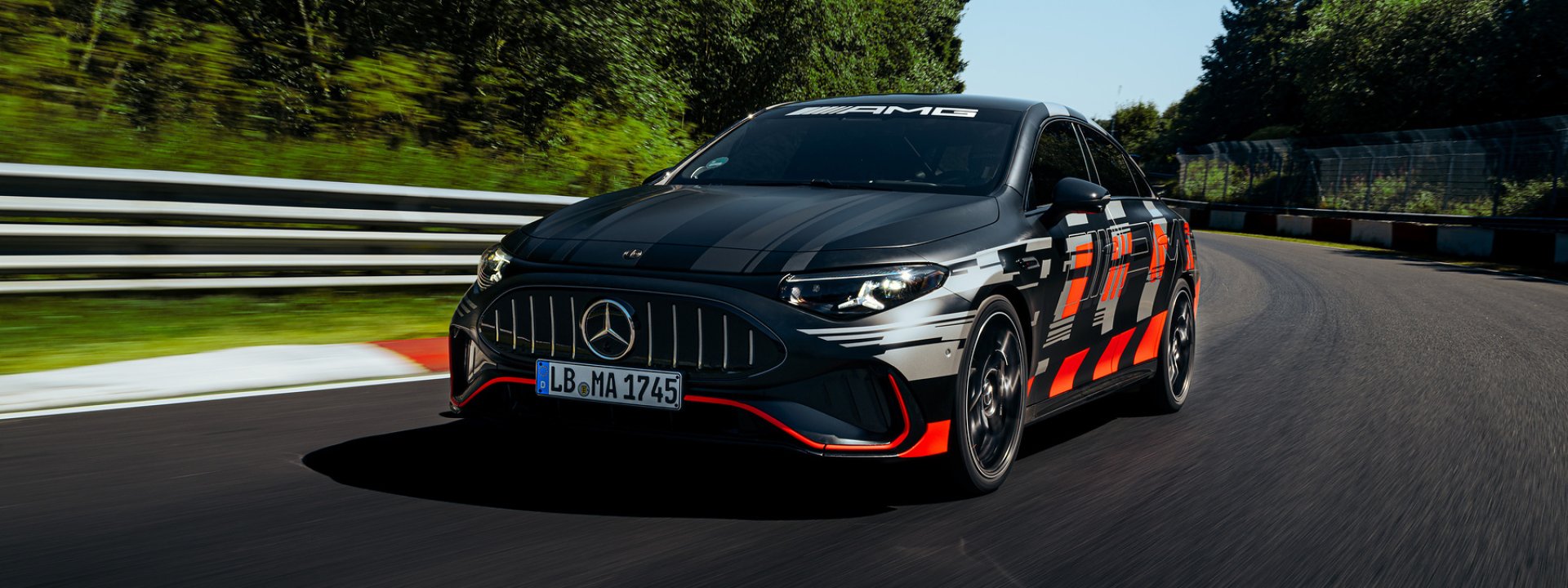
The new electric Mercedes-AMG CLA 45 wasted no time proving its performance credentials, recording a 7:32.070 lap of the Nürburgring Nordschleife.
Image credit: Mercedes-Benz AG
The C-Class Gets Its Biggest Technical Update Yet
For those worried that every Mercedes is about to become an EV, there's some reassuring news.
Mercedes-Benz has just unveiled the comprehensively updated C-Class Saloon and Estate, and combustion engines remain very much part of the programme.
Mercedes describes this as the most extensive technical update in the history of the C-Class.
Considering the C-Class has been around since 1982 and more than 12 million have been sold, that's quite a statement.
The basic W206 shape remains familiar, but the car receives a sharper appearance, revised lighting and a more distinctive Mercedes star-inspired light signature.
Inside, however, is where some of the biggest changes are happening.
The updated C-Class adopts Mercedes' MB.OS operating system, allowing much deeper integration of the vehicle's systems and over-the-air updates.
There's also an AI-powered MBUX Virtual Assistant and navigation incorporating Google's AI technology.
Even the headlights have become considerably more sophisticated, with the latest optional DIGITAL LIGHT system using micro-LED technology.
Under the bonnet, Mercedes continues to offer electrified petrol and diesel engines alongside plug-in hybrids, with selected PHEV versions capable of up to 100km of electric driving on the WLTP cycle.
The engines have also been further developed with future Euro 7 requirements in mind.
For us, however, there's another side to this story.
The modern C-Class increasingly resembles a network of computers that happens to have an engine attached to it.
And that has enormous implications for independent Mercedes specialists.
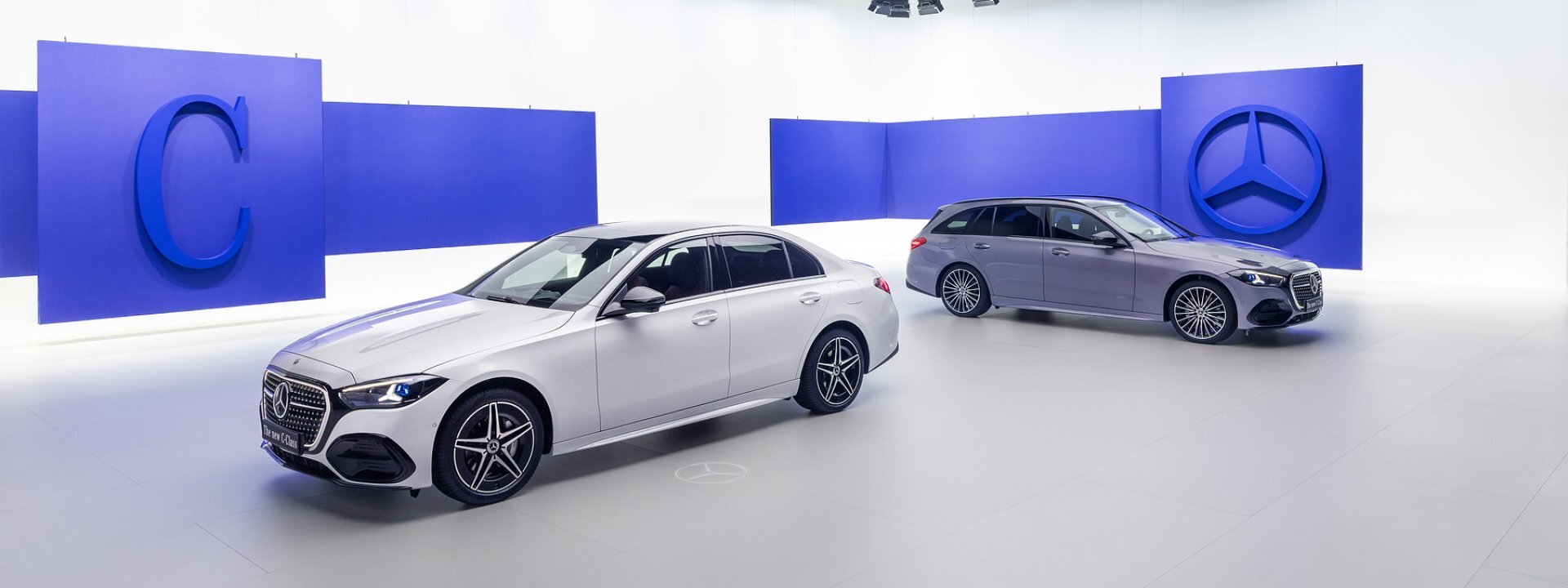
Familiar on the outside, radically more digital underneath — Mercedes calls the latest W206 update the most comprehensive technical upgrade in C-Class history.
Image credit: Mercedes-Benz AG
The New AMG GT 53: 544hp, 800 Volts and 600kW Charging
Mercedes-AMG's electric transformation continued on 6 August with the introduction of the new AMG GT 53 4-Door Coupé.
It sits within AMG's new electric GT family and offers up to:
400kW / 544hp
and
800Nm
with AMG Performance 4MATIC+ all-wheel drive.
Mercedes quotes 0–100km/h in 3.9 seconds, or 3.5 seconds using its one-foot rollout measurement.
Impressive.
But arguably more significant is what's happening with the battery.
The GT 53 uses an 800-volt architecture with directly cooled cylindrical battery cells and a usable battery capacity of 106kWh.
Mercedes quotes more than 800km WLTP range, depending upon specification.
Then there's the charging.
Maximum DC charging capability is quoted at an extraordinary:
600kW.
Under suitable conditions, Mercedes says that could add more than 500km of range in around ten minutes.
That's the sort of figure that begins to change the conversation surrounding performance EVs.
Range is one thing.
Being able to replace that range quickly is arguably much more important.
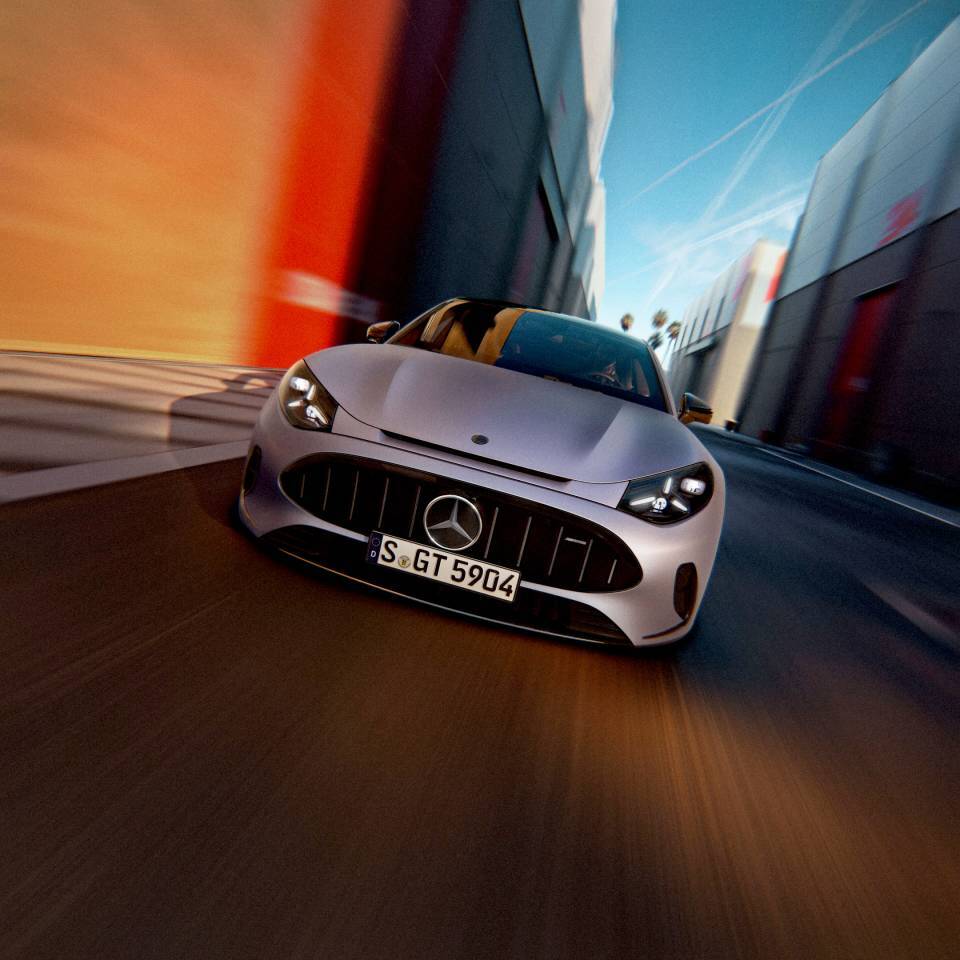
AMG's new GT 53 combines 544hp with an 800-volt architecture and charging capability of up to 600kW.
Image credit: Mercedes-Benz AG
But Can an Electric AMG Still Sound Like an AMG?
This is where things become particularly interesting.
AMG knows that outright performance has never been the whole story.
We've already discussed this in our recent C63 feature.
For generations, part of the AMG experience has been hearing the car before you ever see it.
An M156 C63 didn't need an introduction.
You heard it coming.
Electric propulsion creates an obvious problem.
So AMG is now experimenting with ways of putting some of that theatre back into the experience.
The new GT 53 includes an immersive driving mode that can recreate the character and sound of an AMG six-cylinder engine.
We're sure that will divide opinion.
Can synthesised sound ever replace a genuine AMG engine working hard?
For the purists, probably not.
But the fact AMG is investing engineering time into the problem tells us something important.
Affalterbach knows emotion matters.
Making an EV incredibly fast is relatively easy compared with making somebody fall in love with it.
That may prove to be one of AMG's greatest engineering challenges of the next decade.
The Technology Behind It: Axial-Flux Motors
There's a phrase Mercedes-AMG owners are probably going to become increasingly familiar with:
Axial flux.
Traditional electric motors generally use a radial-flux design.
Axial-flux motors package things differently and can offer exceptional power and torque density from a relatively compact and lightweight unit.
Mercedes-Benz owns British electric-motor specialist YASA, and the technology is rapidly becoming central to AMG's future.
We've now seen it move from the outrageous CONCEPT AMG GT XX technology demonstrator into production AMG vehicles including the new GT and CLA 45.
The GT XX demonstrated just how far AMG believes this technology can go.
Its three-motor system produces more than 1,000kW — over 1,340hp.
AMG has also demonstrated average charging power exceeding 850kW across a substantial part of the charging curve.
Last year, the GT XX famously completed 40,075 kilometres at Nardò in less than eight days, effectively travelling the circumference of the Earth while maintaining enormous sustained speeds and repeatedly rapid-charging.
That record happened in August 2025, not this month, but its relevance has arguably become greater now that we're seeing the technology move into production cars.
The GT XX wasn't just a motor-show fantasy.
It was a preview.
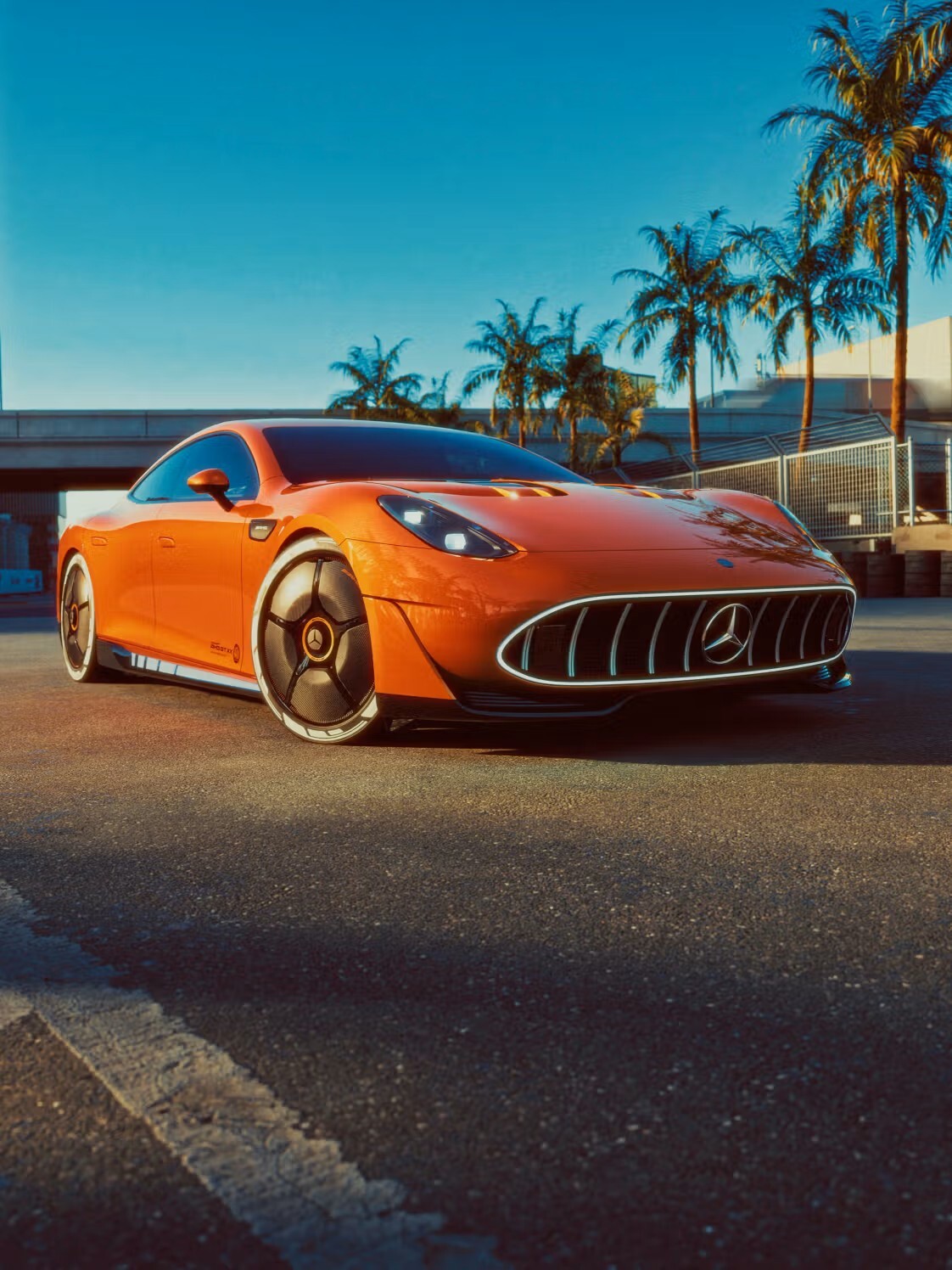
More than a concept — the GT XX has become a technology preview for the new generation of electric AMGs, particularly its axial-flux motors and high-performance battery technology.
Image credit: Mercedes-Benz AG
And Now AMG Is Preparing an Electric Super-SUV
There's more coming.
AMG has begun teasing its first dedicated high-performance electric SUV.
Importantly, this isn't simply an existing Mercedes-Benz SUV receiving bigger brakes, more power and an AMG badge.
It's being developed as an AMG from the outset.
Born in Affalterbach.
Full technical details haven't yet been revealed, so we're not going to pretend we know its final power output.
But given what AMG has already demonstrated with its new electric architecture, the potential is enormous.
The interesting question will be whether AMG can translate the character it is trying to create in its new GT into a larger SUV.
Performance shouldn't be a problem.
Making a two-and-a-half-tonne electric performance SUV genuinely entertaining might be the harder job.
We'll be watching this one closely.
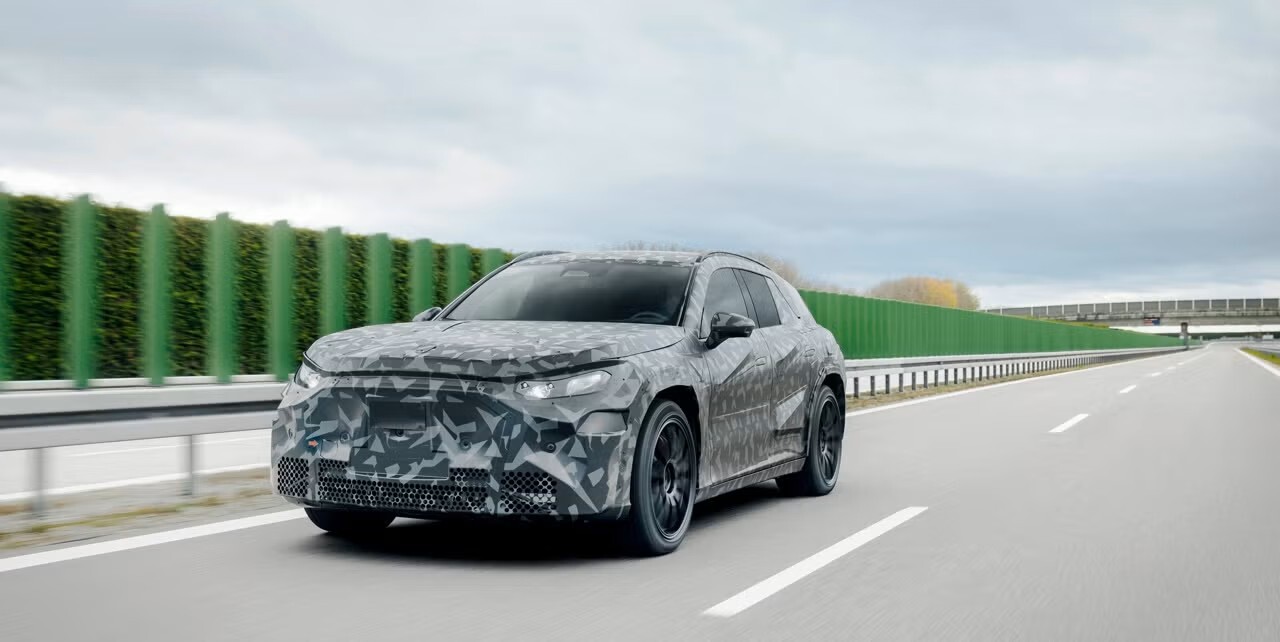
Born in Affalterbach — AMG is preparing its first standalone electric performance SUV, with a full reveal still to come.
Image credit: Mercedes-Benz AG
AMG Motorsport: The Young Guns Are Coming
Electric road cars might be dominating the headlines, but AMG's motorsport programme certainly isn't slowing down.
At the Nürburgring DTM weekend on 16 August, 18-year-old Mercedes-AMG Junior Driver Tom Kalender produced a superb drive.
Starting 11th, Kalender brought his Mercedes-AMG GT3 home in second place, earning his first DTM podium.
It was a particularly impressive result from the youngest DTM driver ever.
Jules Gounon also demonstrated the pace of the AMG GT3 by taking pole position with a new qualifying lap record, although a pit-lane speeding penalty ultimately compromised his race.
Elsewhere, Mercedes-AMG is preparing three GT3s for September's Suzuka 1000km, where it remains firmly in contention in the Intercontinental GT Challenge.
Heading towards Suzuka, Mercedes-AMG drivers occupy the leading positions in the Drivers' Championship battle, while Mercedes-AMG sits second in the Manufacturers' standings.
So while the road-car division is experiencing arguably the biggest powertrain revolution in AMG history, the race programme continues to do things the traditional way.
Petrol.
Noise.
GT3 racing.
And we're absolutely fine with that.
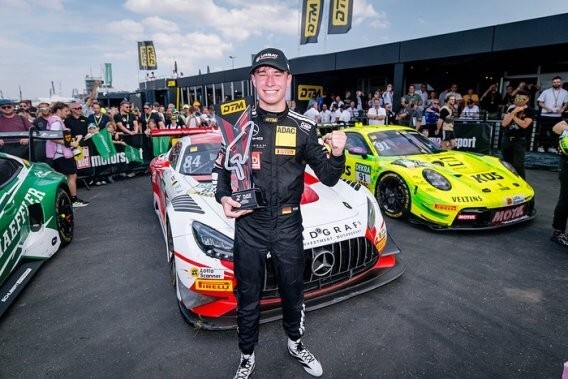
18-year-old AMG Junior Tom Kalender took his first DTM podium at the Nürburgring, finishing second for Mercedes-AMG Team Landgraf.
Image credit: Mercedes-Benz AG
THE BIGGER PICTURE
Take a step back from the individual announcements and August tells us quite a lot about where Mercedes-Benz is heading.
Mercedes isn't simply becoming an EV manufacturer.
Instead, we're entering a period where several completely different technologies are going to coexist.
Petrol.
Diesel.
48-volt mild hybrid.
Plug-in hybrid.
Battery electric.
And within the electric cars themselves, we're now seeing 800-volt systems, directly cooled battery cells, axial-flux motors, active aerodynamics and incredibly sophisticated energy-management software.
At the same time, the conventional C-Class continues with combustion engines.
That's important.
The transition isn't happening overnight.
And for workshops, neither is it simply a case of swapping an engine diagnostic machine for a battery tester.
The complexity is multiplying.
MEISTECH INSIGHT
This is the part of Meistech Monthly that interests us most.
What does all this actually mean when these cars eventually arrive in workshops?
Mercedes-Benz diagnostics has already changed enormously during the last 20 years.
The next ten could make that look relatively straightforward.
We're moving towards cars where mechanical systems, high-voltage components, software, thermal management, communications networks and driver-assistance systems are completely interconnected.
Diagnosing a performance problem may no longer simply mean checking boost pressure, fuel pressure or ignition timing.
It could involve battery temperature.
Individual motor output.
Energy-management strategy.
Software versions.
High-voltage cooling.
Torque distribution.
Or communication between multiple control units.
And performance tuning will change too.
With cars such as the new electric CLA 45, the hardware might be capable of enormous output — but software, battery temperature and energy deployment become just as important as the motors themselves.
That's a completely different performance landscape.
But there's another side to it.
We don't see enthusiasm for traditional AMG disappearing anytime soon.
If anything, as AMG moves deeper into electrification, cars such as the W204 C63, W205 C63, AMG GT and other V8-powered models are likely to become even more cherished by enthusiasts.
One customer might arrive wanting diagnostics on the latest high-voltage Mercedes.
The next might want to preserve, restore or extract more performance from an M156 V8.
That's what makes the next chapter so interesting for us.
The technology will change.
The cars will change.
The way we diagnose and tune them will change.
But the reason we're interested in them hasn't.
We love Mercedes-Benz. We love AMG. And we love making them perform at their best.
MEISTECH
Performance Perfected.
Meistech is an independent Mercedes-Benz and Mercedes-AMG specialist and is not affiliated with, authorised by or endorsed by Mercedes-Benz AG. Mercedes-Benz, Mercedes-AMG and associated model names and trademarks are the property of their respective owners.